Online Courses
A Shelter Story: Integrating Functional Needs Support Services (FNSS) Into Emergency Shelter Plans
The learner's goal in this course is to master the knowledge and skills needed to collaborate with community stakeholders on integrating Functional Needs Support Services (FNSS) into local emergency shelter plans. This one-hour video-based course consists of five sections with estimated viewing times as follows: Getting Started (5 minutes) The Hot-Wash Sessions (20 minutes) The Demographics of Disaster (15 minutes) An Open Conversation (10 minutes) Invitation to Planning (5 minutes) Allow an additional five minutes to complete the Post-Test. Intended Audience — Emergency managers, shelter planners, and other mid-level public health professionals responsible for community preparedness are the intended audience...
Basic Epidemiology: Infectious Disease
Content Summary — There are four sections in this course: Section 1: Epidemiology and Important Terms Section 2: Models for Understanding the Infectious Process Section 3: Epidemiology in Practice Section 4: Surveillance There are review questions at the end of each section. These review questions will provide you with an opportunity to apply the knowledge and skills presented in these sections. In Section 3, you will have the opportunity to look at the case study of foodborne outbreak investigation. This course may be taken by itself, or as part of the New Public Health Administrators (NPHA) Curriculum. Intended Audience — This course is intended for public...
Basic Supervision Skills: Supervision – Coaching
Supervisors frequently engage in coaching discussions with their employees to deal with work-related discrepancies, while fostering respectful supervisor-employee relationships. Intended Audience: — General Learning Objectives: — Identify supervisor's role and responsibility when faced with situations requiring coaching/redirecting. Learn tools to diagnose performance issues and determine the best course of action. Pre-requisites/Learning Level: — No Pre-requisites Competencies addressed: — Conflict Management 2.3 and Human Resources 9.1. Effectively resolve internal employee and/or organizational conflicts through use of conflict management techniques. Provide timely and useful performance reviews. CEUs Offered: — N/A Cost: — Free Modality/format: — Online Self-Pace Length: — 1 hour Presenter(s)...
Be Personally Prepared for Emergencies: What Can You Do?
This webcast originally occurred live on: Wednesday, July 15, 2009 and is now presented in archived format. Related Websites: FEMA - Are You Ready? | Be Ready Iowa Program Goal Bret Voorhees, chief of the Communications and Technology Bureau in the Iowa Homeland Security and Emergency Management Division, will discuss emergency management at the state level and how individuals can prepare for emergencies. Learning Objectives Learn the four phases of emergency management Understand steps taken at the state level to support local responders Learn how Iowans can prepare for emergencies Speaker For the past eight years, Bret Voorhees has been a member...
Betty Miller: Older Female With Right Shoulder Pain
The goal of this course is to provide an interactive learning experience about acute shoulder pain in an older adult. Intended Audience — The intended audience for this course is public health professional, healthcare providers, and pre-licensure students in the fields of medicine, nursing, physical and occupational therapy, pharmacy, and social services. Learning Objectives — At the end of this course, you will be able to Apply valid and reliable tools for measuring pain and associated symptoms to assess and reassess related outcomes as appropriate for the older adult with frozen shoulder. Identify the value and contribution of each team...
Biological Risk Management
The goal of Biological Risk Management (BRM) is to introduce the concept of BRM, disease transmission, and how to minimize the risk of disease. Intended Audience — The intended audience for this course is rural health professionals. Length — The length for this course is approximately 60 minutes depending on the individual user. Upon completion of the course, you will get a certificate of completion from the Great Plains Center of Agricultural Health at the University of Iowa College of Public Health. Prerequisite Requirement — NA, however, it is advisable that you have some basic understanding of agricultural environment. Learning...
Biosafety: Avoiding Lab Acquired Infections (LAI)
There are four sections in this course: Section 1: Background Section 2: BSLs and Use of Equipment for Your Safety Section 3: Pathogens of Risk Section 4: Building Safety into Laboratory Practice There are review questions at the end of each section. These review questions will provide you with an opportunity to apply the knowledge and skills presented in these sections. There is a post-test at the end of the course. A Certificate of Completion is awarded on successful completion of this course. Intended Audience — laboratorians who handle biological and microbiological samples in clinical, reference, public health, animal, research...
Biosecurity for Clinical Laboratories
There are several sections in this course: Biosecurity and Biosafety Risk Assessments and the AMP Model AMP: Assessment AMP: Mitigation AMP: Performance Developing a Biosecurity Plan Quiz This course includes several interactions designed to underscore concepts discussed in the course, two downloadable risk assessment templates and laboratory guidance from APHL on specimen storage. Intended Audience — This course is for clinical laboratorians who want to improve their knowledge of biosecurity practices that protect against unauthorized access, loss, theft, misuse, diversion or intentional release of dangerous biological materials. Learning Objectives — At the end of the training module, you will be...
CASPER: Awareness Course Scenario
The goal of CASPER Awareness Course is to develop a basic understanding of what a Community Assessment for Public Health Emergency Response (CASPER) is and how it can be used following a disaster. Intended Audience — local public health administrators and local county emergency managers Learning Objectives: — After completion of the course, learners should be able to: Definewhat a Community Assessment for Public Health Emergency Response (CASPER) is and its purpose Identifywhen conditions are appropriate for local public health officials or county emergency mangers to initiate a CASPER Describethe types of questions needed to obtain information about the information...
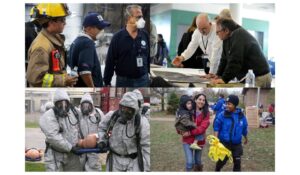
Community Partnering: A Risk Assessment and Emergency Operations Planning Scenario
This course provides guidance on the fundamentals of community-based planning, from contributing to a risk assessment to developing emergency operations plans (EOP) and engaging the whole community in addressing all risks and hazards. The course is intended for local public health administrators and local county emergency managers. Intended Audience — local public health administrators and local county emergency managers Learning Objectives: — After completing this course, learners should be able to: Applythe principles of community-based planning in contributing to a jurisdictional risk assessment for all hazards Expressthe role of risk assessment in developing emergency operations plans Identifya risk-informed planning team...
Creating Persuasive Public Health Messaging
This course is designed to help public health professionals at all experience levels, and across subject areas, create concise, compelling messaging for programs and projects. Intended Audience — Public health practice professionals Length — The length of time for participants to take this course is estimated to be one hour. Course Content — This course will cover: Four Pillars of a Strong Brand Characteristics of Persuasive Messaging Brand Message Hierarchy Case Studies Measurable Outcome — At the end of this training, you will be able to create persuasive public health messaging. Learning Objectives — By the end of this module,...
Critical Thinking
Course Summary — There are 6 steps in this course: Step 1: Identify and Define the Problem Step 2: Gather Information Step 3: Develop Alternatives Step 4: Select an Alternative Step 5: Implement the Solution Step 6: Evaluate the Solution Each module includes at least one Review Question. These review questions will provide you with an opportunity to apply the knowledge and skills presented in the module. Intended Audience — Public health leaders who may need to solve a problem or crisis by thinking critically about it and make appropriate decisions using an established six step model Learning Objectives —...
Dissemination and Disasters: Using Information to Save Lives
This course is designed to demonstrate how resources for the National Library of Medicine can be used to help save lives during disasters. Intended Audience — First responders, medical professionals, public health workers, emergency preparedness coordinators, students, librarians. Length — The length of time for participants to take this course is estimated to be one hour. Course Content — This course will cover: Phases of Emergency Management Categories of incidents CBRNE Natural & Man-Made Public Health/Infection Disease Case Study Examples Hurricane and Storm Surges Opioids Radiological Emergency Chemical Spills You will have the opportunity to watch the simulation and then...
Don’t Panic: Principles of Crisis and Risk Communication Scenario
Course Description — Assist individuals with developing messaging to convey information to the general and special populations. It includes guidelines and tools that will help you to create an appropriate message. Intended Audience — Health practitioners who need to increase their ability to effectively communicate with the public, media, health care providers and response community during a public health emergency. Learning Objectives: — After completion of the course, learners should be able to: Discuss the underlying theories of crisis and risk communication guidelines. Illustrate principles of developing a message map. Explain how to utilize a message map. Describe conducting pre-emergency...
Donald Williams: Interdisciplinary Pain Management: Older Adult Right Total Knee Arthroplasty
The goal of this course is to provide an interactive learning experience about an older gentleman, Donald Williams, who had a total knee arthroplasty. Intended Audience — The intended audience for this course is public health professional, healthcare providers, and pre-licensure students in the fields of medicine, nursing, physical and occupational therapy, pharmacy, and social services. Interdisciplinary care coordination plays an integral role in post total knee arthroplasty case management. The healthcare team may have similar areas for assessment such as pain assessment, pain impact, safety assessment or home exercise program. Each discipline will evaluate the information to address different...
Effect of Disasters on Mental Health for Children and Adolescents
This course covers the following topics: Risk Factors Psychological First Aid for Children and Adolescents What Parents Can Do to Help Common Reactions of Children and Adolescents to Traumatic Stress Pathological Reactions of Children and Adolescents to Traumatic Stress Treatment Options Throughout the course you will have the opportunity to participate in a scenario-based activity, in which you will apply the knowledge you have attained. Intended Audience — anyone who will come into professional contact with disaster victims who are children or adolescents, including DMAT, hospital workers, EMTs, primary care providers and public health workers Learning Objectives: — After completing...
Effect of Disasters on Mental Health: Awareness Level
Course Summary — There are three sections in this course: Section 1: Disaster, Trauma and Proximity to the Event Section 2: Psycho-Physiology of Trauma and Fear Section 3: Tools for Understanding There are review questions at the end of modules. These review questions will provide you with an opportunity to apply the knowledge and skills presented in these modules. In addition, some modules contain practice exercises to help you better understand the material. Intended Audience — anyone who will come into professional contact with disaster victims, including DMAT, hospital workers, EMTs, primary care providers and public health workers Learning Objectives:...
Effect of Disasters on Mental Health: Technical Level
Course Summary — There are three modules in this course: Section 1: Assessment and Intervention in the Immediate Aftermath of a Disaster Section 2: Assessment and Intervention in the Weeks/Months after the Disaster Section 3: Cultural Awareness There are review questions at the end of each section. These review questions will provide you with an opportunity to apply the knowledge and skills presented in these sections. In addition, some sections contain practice exercises to help you better understand the material. Intended Audience — Anyone who will come into professional contact with disaster victims, including DMAT, hospital workers, EMTs, primary care...
Effective Communication for Environmental Public Health
Contact: N/A Phone: (206) 685-1130 E-mail: nwcphp@u.washington.edu Description: Do you find yourself struggling to communicate your public health message? This self-paced, interactive module is designed for public health professionals, especially those responsible for implementing environmental health programs. It introduces key communication strategies to help field workers successfully educate the public about environmental public health issues, communicate important environmental health information to diverse audiences, resolve conflicts, and market the value of environmental public health activities to clients and the public. Objectives: Summarize the five components of the communication process Describe three skills important for effectively educating the public about environmental public...
Electronic BT Workshop for Sentinel Labs
The course consists of a Virtual Bioterrorism Workshop. In this interactive workshop you will determine whether to rule out or refer several organisms that are considered potential agents of bioterrorism by applying Laboratory Response Network protocols for Level A (sentinel) laboratories. When a possible agent of bioterrorism cannot be ruled out, you will view a video describing the clinical presentation and etiology of the agent. Intended Audience — Laboratorians who handle biological and microbiological samples in clinical, reference, public health, animal, research or teaching laboratories. Learning Objectives — After completing this course, you will be able to: Rule out or refer...
Emergency Medical Services Operations and Planning for Weapons of Mass Destruction – Part I
There are a total of nine modules in the Emergency Medical Services Operations and Planning for Weapons of Mass Destruction course. The course has been divided into the three parts as outlined below. Part 1 Module 1: Emergency Response Guide Module 2: Biological Weapons Module 3: Radiological Weapons These modules contain practice exercises that will provide you with an opportunity to apply and better understand the material presented. Intended Audience — intended to train EMS personnel to properly perform patient triage, treatment, and transportation in the event of exposure to biological, nuclear (radiological), incendiary, chemical, and explosive weapons Learning Objectives:...
Emergency Medical Services Operations and Planning for Weapons of Mass Destruction – Part II
There are a total of nine modules in the Emergency Medical Services Operations and Planning for Weapons of Mass Destruction course. The course has been divided into the three parts as outlined below Part I Module 1:Emergency Response Guide Module 2:Biological Weapons Module 3:Radiological Weapons Part II Module 4:Incendiary Weapons Module 5:Chemical Weapons Module 6:Explosive Weapons Part III Module 7:Decontamination Module 8:Interaction with the Hospital Module 9:Detection This session covers modules 4 through 6 These modules contain practice exercises that will provide you with an opportunity to apply and better understand the material presented. Intended Audience — This course is...
Emergency Medical Services Operations and Planning for Weapons of Mass Destruction – Part III
There are a total of nine modules in the Emergency Medical Services Operations and Planning for Weapons of Mass Destruction course. The course has been divided into the three parts as outlined below. Part I Module 1: Emergency Response Guide Module 2: Biological Weapons Module 3: Radiological Weapons Part II Module 4: Incendiary Weapons Module 5: Chemical Weapons Module 6: Explosive Weapons Part III Module 7: Decontamination Module 8: Interaction with the Hospital Module 9: Detection This course will cover modules 7 through 9 These modules contain practice exercises that will provide you with an opportunity to apply and better...
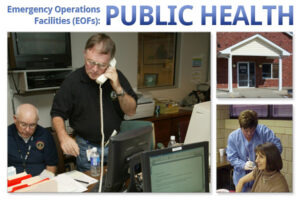
Emergency Operations Facilities (EOFs) Public Health
Course Summary — There are six modules in this course: Module 1: What Is an Emergency Operation Facility (EOF)? Module 2: Staffing an EOF Module 3: EOFs and Communication Module 4: Determining Information, Systems, and Equipment Needs Module 5: Activating and Deactivating the EOF Module 6: EOF Operations There are review questions at the end of each section. These review questions will provide you with an opportunity to apply the knowledge and skills presented in these sections. You also will be able to test your knowledge using H1N1 scenario in scenario's section, and play a puzzle game for the important...
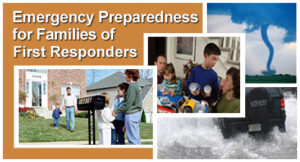
Emergency Preparedness for Families of First Responders
Goal/Intended Audience — The goal of this course is to provide the information and tools necessary to enable first responders to prepare their families for an emergency event. This course is intended for first responders and their family members. (Family members do not need to take the online course, but are encouraged to participate in the printed activities once the course is completed). Capabilities identified: — Capability 1: Community Preparedness Function 1: Determine risks to the health of the jurisdiction Function 2: Build community partnerships to support health preparedness Competencies identified: — 4.1 Maintain personal/family emergency preparedness plans. 4.1.1 Describe...
Emergency Response to Domestic Biological Incidents – Part I
Goal/Intended Audience — This course is designed to prepare representatives of state and local emergency response and public health agencies to perform safely and effectively during an incident involving biological agents. Course Content — This course has been divided into the three parts, each consisting of three modules. Module topics are outlined below. Part I: — Module 1: A Background for Bioterrorism Module 2: Threats and Vulnerabilities Module 3: Biological Agents, Effects, and Treatments Part II: — Module 4: Basic Principles in the Use of Biological Agents Module 5: Managing Biological Incidents Module 6: Immediate Actions and Decontamination Part III:...
Emergency Response to Domestic Biological Incidents – Part II
This course has been divided into the three parts, each consisting of three modules. Module topics are outlined below. Part I Module 1: A Background for Bioterrorism Module 2: Threats and Vulnerabilities Module 3: Biological Agents, Effects, and Treatments Part II Module 4: Basic Principles in the Use of Biological Agents Module 5: Managing Biological Incidents Module 6: Immediate Actions and Decontamination Part III Module 7: Response to Bioterrorism Module 8: Response to Public Health Emergencies Module 9: Perspective on the Future of Terrorism This course will cover modules 4 through 6 These modules contain practice exercises that will provide...
Emergency Response to Domestic Biological Incidents – Part III
This course has been divided into the three parts, each consisting of three modules. Module topics are outlined below. Part I Module 1: A Background for Bioterrorism Module 2: Threats and Vulnerabilities Module 3: Biological Agents, Effects, and Treatments Part II Module 4: Basic Principles in the Use of Biological Agents Module 5: Managing Biological Incidents Module 6: Immediate Actions and Decontamination Part III Module 7: Response to Bioterrorism Module 8: Response to Public Health Emergencies Module 9: Perspective on the Future of Terrorism This course will cover modules 7 through 9 These modules contain practice exercises that will provide...
Ethics and Data Integrity for Non-Technical Staff
Course Summary — This online course introduces the concepts of ethics and integrity, defines the difference between the two and illustrates how these traits apply to non-technical staff in a public health laboratory. Examples of general workplace ethics are used throughout the course, from arriving on time to using the Internet for non-work activities. the term, "data integrity" is introduced and its relationship to fraud is given, including Information Technology and Public Relations. The responsibilities of management and staff in maintaining data integrity and preventing fraud are presented in an interactive format. The importance of documentation, and its use as...
Ethics and Data Integrity for Technical Staff
This online course discusses ethics and personal integrity and illustrates how these traits apply to technical staff in a public health or other laboratory. Examples of general workplace ethics are provided. Many of the ways that data integrity can be affected by technical staff are explained, from recognizing when sample integrity has been compromised to documenting errors, handling calibration and quality control issues, and changing or correcting results. Examples are given to show how improper practices and the failure to maintain data integrity can lead to fraud. One section of the course is dedicated to improper laboratory practices and how...
Evaluating Effectiveness in Public Health at the Individual and Organizational Level
This presentation will highlight the importance of a systematic approach in evaluating the effectiveness of public health programs, practices, and policies. The presentation will provide applied examples of key concepts and principles and emphasize practical approaches for developing and implementing these evaluation efforts. Intended Audience — Learning Objectives: — Define key concepts in systematically evaluating public health programs, practices, and policies Name the essential elements of evaluation in public health practices to ensure on-going improvement throughout the public health systems Review the elements of the logic model and its role in guiding subsequent evaluation efforts Describe the importance of evaluating...
Experiences with Strategic Planning in Public Health Organizations
Contact: Brandi Bordelon Phone: 504-988-1342 E-mail: trdirect@tulane.edu Description: Strategic planning has been known to produce positive results, so why are many state and local health departments hesitant to try it? We'll explore the issue in-depth. Competency: CHCM-M04, M05, M06, M07
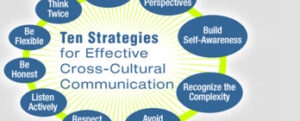
Exploring Cross-Cultural Communication
This course invites learners to spend time thinking about and developing their own responses to a variety of ideas and situations about culture, communication and public health. Learners will explore the meaning of culture, methods of communications, and strategies for communicating more effectively. Intended Audience — General Learning Objectives: — Give examples of discriminating and non-discriminating practices in providing public health services Recognize effective methods/strategies/techniques for unbiased communication Explain how effective cross-culture communication influences public health service and program acceptance Identify specific factors that influence and individuals or group’s acceptance of public health information and services Describe job-specific benefits and...
Forensic Epidemiology: Joint Training for Law Enforcement and Public Health Officials
Course Summary — There are four modules in this course: Module 1: Public Health Epidemiology for Law Enforcement Officials Module 2: Criminal Investigation for Public Health Professionals Module 3: The Role of the Laboratory - Public Health and Forensic Module 4: Working Together on Investigations After completing these modules, you will be presenting with three case studies. Problems and questions will be discussed and you may also involve in a discussion board for in-depth discussion regarding the case studies. There are practice exercises at the end of each module. These practice exercises will provide you with an opportunity to apply...
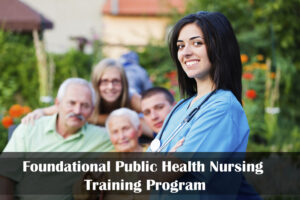
Foundational Public Health Nursing Training Program
About This Program: — The "Foundational Public Health Nursing Training Program" was designed to address key knowledge, skills, and abilities public health nursing coordinators/supervisors must apply to demonstrate the core public health nursing competencies and to deliver the essential public health services at a local level. This program meets the educational requirements stated in the definition of a "Public Health Coordinator/Supervisor," in the Iowa Administrative Code, Chapter 80 on Local Public Health Services. Program Content: — There are five courses in this program: Presenter(s): Length: Course 1: Knowledge of Public Health Christopher Atchison 1 hour Course 2: Strategic...

Fundamentals of Centrifuge Safety
Centrifuges are instruments used to separate mixtures, based on particle size and density, by spinning the mixtures at high speeds. These instruments are essential tools in all types of laboratories. Serious injuries or potential exposures can occur if centrifuges are improperly used or maintained. This basic-level eLearning course provides information on the safe use of centrifuges. Topics covered include major parts of a centrifuge, types of centrifuges, potential hazards, how to work safely with a centrifuge, and what to do if there is an emergency. Audience — Public health and clinical laboratory staff, safety professionals and persons interested in safe...

Fundamentals of Chemical Fume Hood Safety
A chemical fume hood is the main piece of laboratory equipment that protects laboratory staff working with hazardous chemicals. When properly used, fume hoods protect staff from inhaling chemical gases, vapors, and aerosols. They serve as a physical barrier between staff and the hazardous materials inside the hood, and provide some splash protection. This basic-level eLearning course provides an essential understanding of the major components of a chemical fume hood and proper practices for its safe and effective operation. Topics covered include the major components and types of fume hoods and their monitors, maintaining proper airflow, daily use protocols and...

Fundamentals of Personal Protective Equipment (PPE) in Clinical Laboratories
Safety is imperative when working with potentially harmful materials and other hazards in the laboratory. This course is designed to assist clinical and public health laboratory professionals with applying risk management strategies to identify hazards, assess risks, and select appropriate personal protective equipment (PPE) options. Objectives — At the conclusion of this course, participants will be able to: Describe how PPE helps protect laboratory professionals. Recognize hazards and risks associated with laboratory procedures. Identify PPE options, limitations, and considerations for selecting appropriate PPE. Select appropriate PPE options for given clinical laboratory scenarios. Length — 1 hour Continuing Education Units (CEU)...
HAZMAT Awareness for First Responders
There are four sections in this course: Section 1: Hospital ‘First Receivers’ and Contaminated Patients in the Hospital Section 2: Recognizing Hazardous Substances in the Emergency Department Section 3: Understanding The Hospital’s Response Plan & Your Role Section 4: Common Hazardous Substances in Your Community There are review questions at the end of each section. These review questions will provide you with an opportunity to apply the knowledge and skills presented in these sections. There is a post-test at the end of the course. A Certificate of Completion is awarded on successful completion of this course. Intended Audience — Health...
HAZMAT for Healthcare Providers: Awareness Level
Goal — The presence of hazardous materials in an Emergency Department is a risk to everyone - hospital personnel, patients and other people within the hospital. During HAZMAT incidents, hospital personnel should have two main goals: to protect both themselves and others from exposure to the hazardous material to provide the same level of care for the contaminated patient as any other patient This course is intended to help you respond to incidents involving hazardous materials in a way that meets these two goals. Intended Audience — This course is intended for health care workers in a hospital environment who...
HAZMAT for Healthcare Providers: Operations Level
Course Overview — Goal/Intended Audience — This course is intended for health care workers in a hospital environment who may need to respond to an incident involving a contaminated patient on the operations level. Prerequisite — HAZMAT Awareness for Healthcare Providers is a prerequisite for this course. Capabilities identified: — Capability 2: Community Recovery Function 1: Identify and monitor public health, medical, and mental/behavioral health system recovery needs. Function 2: Coordinate community public health, medical, and mental/behavioral health system recovery operations. Function 3: Implement corrective actions to mitigate damages from future incidents. Capability 6: Information Sharing Function 1: Identify stakeholders...
Hospital Command Centers
There are six modules in this course Module 1:What is a Hospital Command Center Module 2:Staffing a Hospital Command Center Module 3:Hospital Command Centers and Communication Module 4:Determining Information, Systems, and Equipment Needs Module 5:Activation and Deactivation the Hospital Command Center Module 6:Hospital Command Center Operations There are review questions at the end of each section. These review questions will provide you with an opportunity to apply the knowledge and skills presented in these sections. You also will be able to test your knowledge using H1N1 scenario in scenario's section, and play a puzzle game for the important key terms...

Human Resources
The University of Iowa College of Public Health's Institute for Public Health Practice, in cooperation with the Iowa Association of Local Public Health Agencies (I-ALPHA), has developed a series of practiced-based educational programs targeted toward new public health administrators and nursing administrators. The programs are part of the Institute's continuing effort to provide training to strengthen the skills and knowledge of the current public health workforce. Intended Audience — Public health administrators and nurse administrators who are relatively new in their positions (3 years or less) and who seek to enhance their skills and knowledge Learning Objectives — At the...
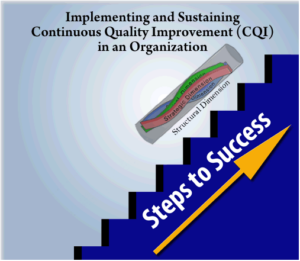
Implementing and Sustaining Continuous Quality Improvement (CQI) in an Organization
Course Summary — There are four sections in this course: Section 1: CQI Myths Section 2: Brief Overview of CQI Section 3: Incorporating CQI into Organizational Culture Section 4: Demonstrating How CQI works in Governmental Public Health – A Case Study There are review questions at the end of each section. These review questions will provide you with an opportunity to apply the knowledge and skills presented in these sections. There is a post-test at the end of the course. Intended Audience — Board of Health members, Local Public Health Department Directors, Board of Supervisor members, County Leaders, and other...
Introduction to Analytical Measurement Uncertainty
Course Summary — This online course introduces the topic of measurement uncertainty and defines the basic terms of measurement. The reason that all measurements contain some level of doubt is explained and illustrated. A distinction is made between random and systematic error and examples are given. The importance of understanding measurement uncertainty in a laboratory setting is stated and examples are provided of situations in which the laboratorian will need this knowledge. The mathematical functions used in calculating standard deviation are demonstrated and the role of standard deviation in determining measurement uncertainty is explained. Finally, the user is taken, step...
Introduction to Budgeting for Public Health Laboratories
Budgeting and fiscal management are challenges to all laboratory supervisors, both new and not so new. Gone are the days when the laboratory received a significant amount of its funding from a single source. Today, government laboratories have numerous funding streams, including appropriated state or local revenue, direct federal funding, indirect federal funding (through other departmental grant recipients), fees or other earned income and third party reimbursement such as Medicaid. The fiscal management of a public health laboratory is not only more complex than in days past, but with increased focus on public accountability it is also subject to greater...
Introduction to Resource Management for Public Health Laboratories
Public health laboratories must ensure a sufficient flow of funds to attract and keep top-notch staff, as well as to obtain and maintain required facilities and equipment. Furthermore, like shareholders of a corporation, the stakeholders in a laboratory--funding organizations, state government, taxpayers, and so on---demand a demonstration of the value they get for the money they spend. Herein lies the real challenge for the laboratory manager: How can you create and maintain an environment that allows protection of public health, yet be financially sound and maintain accountability to those who have a stake in the laboratory's operation? Resource management provides...

Iowa Early Childhood Sun Protection
Course Overview — There are five sections in this course: Section 1: Overview Section 2: UV and Skin Cancer Prevention Section 3: Sun Safety Strategies Section 4: Curriculum Activities Section 5: Appendixes and Questionnaire There are review questions at the end of module 1 to module 4. These review questions will provide you with an opportunity to apply the knowledge and skills presented in these sections. There is a post-test at the end of the course. Intended Audience — The intended audience for this course is child care personnel who teach children ages three to five, and public health professionals....
IS 26 – Guide to Points of Distribution
Course Summary — This guide was developed to support the Points of Distribution (POD) overview video and provide an in depth look into the planning, operations, and demobilization stages of a POD mission. The lessons detail the staffing and procedures any state will need to plan for, execute, and shut down POD operations. The guide also includes key lessons such as safety, equipment, and resource accountability and informs the reader about the “Adopt a POD” program being used by the state of Washington Intended Audience — State and Local Emergency Managers Learning Objectives: — By the end of reading this...
IS 520 – Continuity of Operations for Pandemic Influenzas
This course introduces students to the characteristics of a pandemic influenza, the effects that a pandemic influenza can have on every facet of our society, and the steps their organizations can take to minimize the effects of a pandemic. Course Objectives: — At the end of this course, the students should be able to: Explain the differences between seasonal influenza and pandemic influenza. Relate the effects of a pandemic influenza to daily organizational operations and basic services. Describe strategies for resolving continuity challenges presented in a pandemic situation. Primary Audience — The primary audiences for this course are personnel at...
IS-100.C Introduction to Incident Command
ICS 100, Introduction to the Incident Command System, introduces the Incident Command System (ICS) and provides the foundation for higher level ICS training. This course describes the history, features and principles, and organizational structure of the Incident Command System. It also explains the relationship between ICS and the National Incident Management System (NIMS). The Emergency Management Institute developed its ICS courses collaboratively with: National Wildfire Coordinating Group (NWCG) U.S. Department of Agriculture United States Fire Administration’s National Fire Programs Branch Course Objectives: — At the completion of this course, you should be able to: Explain the principles and basic structure...
IS-1300: Introduction to Continuity of Operations
This course is intended to lay the foundation of knowledge for students who wish to increase their understanding of continuity and building a comprehensive continuity program in their organization or jurisdiction. This course will replace IS-546.A Continuity of Operations Awareness Course and IS-547.A Introduction to Continuity of Operations. IS-546 and IS-547 contain outdated materials and information, are redundant (they contain the same information), and do not align with current federal guidance. IS-1300 eliminates the redundancies by compiling the introductory continuity information into one course, and ensures that the information presented is in alignment with current federal guidance (e.g., Continuity Guidance...
IS-200.C: Basic Incident Command System for Initial Response
IS200, Basic Incident Command System for Initial Response, reviews the Incident Command System (ICS), provides the context for ICS within initial response, and supports higher level ICS training. This course provides training on, and resources for, personnel who are likely to assume a supervisory position within ICS. The Emergency Management Institute developed its ICS courses collaboratively with: National Wildfire Coordinating Group (NWCG) U.S. Department of Agriculture United State Fire Administration’s National Fire Programs Branch Note: IS-200.c is an updated version of the IS-200 course. If you have successfully completed IS-200.b or IS-200.a, you may want to review the new...
IS-700.B NIMS An Introduction
Course Summary — This course introduces and overviews the National Incident Management System (NIMS). NIMS provides a consistent nationwide template to enable all government, private-sector, and nongovernmental organizations to work together during domestic incidents. Intended Audience — Individuals with emergency management responsibilities including prevention, preparedness, response, recovery and mitigation. Learning Objectives: — At the end of the course you should be able to: Describe the intent of NIMS Describe the key concepts and principles underlying NIMS Describe the purpose of the NIMS Components including: Preparedness, Communications and Information Management, Resource Management, and Command and Management Describe the purpose of the...
IS-800 National Response Framework: An Introduction
The goal of the IS-0800.d, National Response Framework, An Introduction, is to provide guidance for the whole community. Within this broad audience, the National Response Framework focuses especially on those who are involved in delivering and applying the response core capabilities, including: Private sector partners Non-governmental organizations (NGOs) Government officials Community leaders Emergency management practitioners First responders The learner must achieve a minimum passing score of 75% on final knowledge assessments to earn the IACET CEU. Selection Criteria: The National Response Framework is intended to provide guidance for the whole community. Within this broad audience, the National Response Framework focuses...
Joint Information Center – How Does It Work?
Course Summary — There are three sections in this course: Section 1: Defining the Joint Information to the Public Section 2: Getting Information to the Public Section 3: Staffing and Organizational Structure There are practice activities/exercises throughout the lessons. These practice activities/exercises will provide you with an opportunity to apply the knowledge and skills presented in these lessons. There is a Post-test at the end of lesson 3. Intended Audience — Local and state public information officers Learning Objectives — After completing this course, you will be able to: Describe the function of the Joint Information Center within the Incident Command System (ICS)....
Knowledge of Public Health
Course Summary — The University of Iowa College of Public Health's Upper Midwest Public Health Training Center (UMPHTC), in cooperation with the Iowa Counties Public Health Association (ICPHA), has developed a series of practiced-based educational programs targeted toward new public health administrators and nursing administrators. The programs are part of the Institute's continuing effort to provide training to strengthen the skills and knowledge of the current public health workforce. The purpose of the course is to cover topics that are especially relevant to new public health administrators. It is hoped that by the end of the course participants will have...

Leadership Management Communication
No matter how effective a leader/manager you already are, this course is designed to refresh and refine the skills needed to lead your teams to success in today's fast-paced and stressful health care environment. By exploring effective leadership styles and strategies, this course provides specific tools to enhance leadership/management communication. Intended Audience: — Learning Objectives: — By the end of the course, you should be able to do the following: Identify the differences between leadership and management, describe the tasks and essentials of effective leadership, and identify the differences between dissonant and resonant leadership styles Understand how and why well...
Leadership, Strategic Planning and Systems Approaches
Intended Audience: — Learning Objectives: — Pre-requisites/Learning Level: — None Competencies addressed: — CHCM-R07 Utilize effective communication and marketing principles to impact primary health care organization problems and challenges specific to targeted audiences. CEUs Offered: — Cost: — Free Modality/format: — Online Self-Pace Length: — 1 hour Presenter(s) and/or Content Experts: — Technical requirements: — Adobe Acrobat Reader Speakers Registration requirements: — Register a free account Creation and/or update: November 12, 2012 —
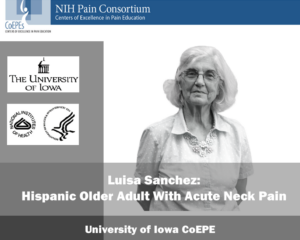
Luisa Sanchez: Hispanic Older Adult with Acute Neck Pain
The goal of this course is to provide an interactive learning experience about a 69-year-old Hispanic woman with acute neck pain that began two weeks ago. Intended Audience — The intended audience for this course is pre-licensure students in the fields of medicine, nursing, and physical therapy. Length — The length for this course is approximately 60 minutes depending on the individual user. Upon completion of the course, you will get a certificate of completion. Course Content — This interactive module will cover three events: Event 1: Primary Care Visit Event 2: Physical Therapy Visits Event 3: Primary Care Provider...
Managerial Communications
On completion of this course, the user will be able to demonstrate written and oral communication skills that are needed as a leader in a health department by: identifying communication skills, listing effective presentation skills, and distinguishing different writing techniques. Intended Audience: — Learning Objectives: — Module 1: Effective Interpersonal Communication - Distinguish the fundamental elements of message, explain the message model, identify tangible and intangible barriers, distinguish the levels of listening, describe the guides to good listening,and explain the key points of basic interpersonal communication Module 2: Presentation Skills - Identify the objectives of a good presentation, Distinguish physical,...

Managing Diversity Begins With You
The purpose of this intermediate course is to acquire a conceptual framework with tools to manage diversity in the workplace as a way of improving service delivery, quality, and accessibility. It is expected that each participant will be able to identify their role in their own organization with respect to diversity and cultural competency and to position their organization as a leading organization in the delivery of culturally competent services. Intended Audience: — Knowledgeable Learning Objectives: — To mange workplace diversity by enhancing communication skills To manage workplace diversity by enhancing conflict resolution skills with individuals and groups representing diverse...
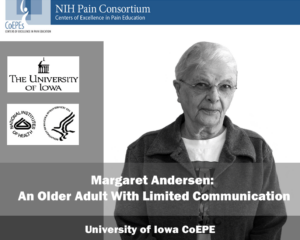
Margaret Andersen: An Older Adult With Limited Communication
The goal of this course is to provide an interactive learning experience about about a 85-year-old woman, Margaret Andersen, with limited communication who demonstrates changes in behavior two weeks after entering a nursing care facility. Intended Audience — The intended audience for this course is public health professionals, pre-licensure students in the fields of medicine, dentistry, nursing, physical and occupational therapy, pharmacy, and social services. Learning Objectives — At the end of this module, you will be able to: Apply valid and reliable tools for pain assessment in an older adult with limited communication. Describe the important elements of oral...
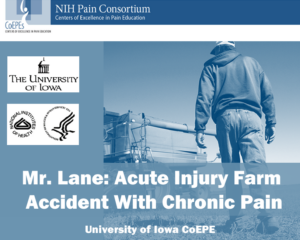
Mr. Lane: Acute Injury Farm Accident With Chronic Pain
The goal of this course is to provide an interactive learning experience about acute injury in a person who has chronic pain. Intended Audience — The intended audience for this course includes public health professionals, healthcare providers, and pre-licensure students in the fields of pain management and education. Learning Objectives — At the end of this course, you will be able to: Explain how cultural, institutional, societal, and regulatory influences affect assessment and management of pain. Use valid and reliable tools for measuring pain and associated symptoms to assess and reassess related outcomes as appropriate for the clinical context and...
New Public Health Administrators Program
This series of 14 courses is intended to benefit new public health administrators. Public Health Law Risk Communication Strategic Planning Basic Epidemiology Community Planning to Improve Quality of Life Contracts Critical Thinking Financial Management Finding & Evaluating Health Info on the Internet Grant Writing Human Resources Knowledge of Public Health Marketing Overall Aspects of Managing an Agency Courses address topics including general agency management, grant writing, contracts, critical thinking, human resources, general public health knowledge, etc.Enroll in the curriculum, and then work through the courses in any order. There is a quiz at the end of each course.*Please note that...
Online Resources to Support Evidence-Based Practice on Population Health
There are five sections in this course: Population Health and Healthy People 2020 Medline Plus: Supporting the Public With Easy-to-Read Consumer Health Information An Introduction to PubMed: Finding Peer-Reviewed and Evidence-Based Public Health Articles Surveillance Previewing Ongoing Research With HSRProj Scenario Practices There are review questions and “Try it Yourself” scenario integrated in the module to provide you with an opportunity to apply the knowledge and skills presented in this module. In addition, section 5 is designed for you to apply the knowledge using the presented scenarios. Intended Audience — Public health professionals interested in advancing their ability to locate...
Organizing Your Lab with Lean 6 Sigma Principles
Course Summary — This online course explains the use of Lean 6S principles in organizing the physical workplace for efficiency. The course shows how to eliminate the four types of waste: mistakes & reworks, excess inventory, unnecessary transporting and unnecessary motion. To accomplish this, the six sequential steps of Lean 6S are explained in detail and illustrated with photographs as well as graphics. Examples of Lean 6S initiatives at the State Hygienic Laboratory in Iowa reinforce the results that can be accomplished by employing these principles. Additionally, the course includes several interactive sections to engage the user. This course provides...
Overall Aspects of Managing an Agency
The University of Iowa College of Public Health's Upper Midwest Public Health Training Center (UMPHTC), in cooperation with the Iowa Counties Public Health Association (ICPHA), has developed a series of practiced-based educational programs targeted toward new public health administrators and nursing administrators. The programs are part of the Institute's continuing effort to provide training to strengthen the skills and knowledge of the current public health workforce Intended Audience — Public health administrators and nurse administrators who are relatively new in their positions (3 years or less) and who seek to enhance their skills and knowledge. Learning Objectives — At the...
Pandemic Influenza: Protecting Iowa First Responders
This course consists of five 15-minute presentations featuring the topics listed below. A Pre-Test and a Post-Test, to be completed by all participants, have been included to assess the effectiveness of the program. Avian Influenza and Historical Pandemic Events Self-Protective Measures Public Health Approaches to Disease and Illness Prevention Isolation and Quarantine Psychological Impact of Pandemics Intended Audience — Iowa’s first responders Learning Objectives: — At the conclusion of this program, participants will be able to: Describe the history and current status of pandemic influenza. Discuss safety considerations that must be implemented when responding to a pandemic influenza event. Describe...
Pandemic: A Critical Thinking Scenario
Goal — The goal of this scenario is to assess and train mid-level public health professionals in the application of critical thinking as a means of solving problems related to community preparedness for public health emergencies, such as an Influenza Pandemic. The scenario is based on the Critical Thinking course as well as using the established model of Critical Thinking that has six steps: Identify and Define the Problem Gather Information Develop Alternatives Select an Alternative Implement the Solution Evaluate the Solution Intended Audience — The audience for this course consists of mid-level public health professionals and/or those responsible for...
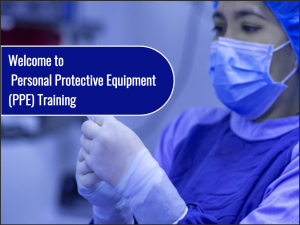
Personal Protective Equipment (PPE)
Goal — This course is designed for local public health agencies and professionals who may be involved in public health disasters. The goals of the course are to: Increase awareness of the importance of using PPE in public health emergencies and crises. Reinforce appropriate PPE in different crisis situations and biohazards. Intended Audience — The intended audience for this course is local public health employees/ agencies and “on site” professionals who may be involved in public health emergencies such as flooding, disease outbreak, hurricanes and floods, debris cleanup, mass fatalities, or any other related public health emergencies. Length — The...
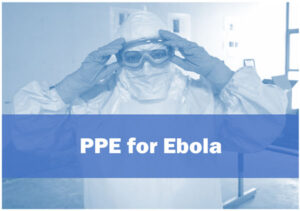
Personal Protective Equipment (PPE) for Ebola
Goal — To provide just-in-time information on donning and doffing PPE procedures when providing care to a person under investigation (PUI) patient with confirmed Ebola who are clinically stable and do not have bleeding, vomiting, or diarrhea, often considered “dry” patients. Intended Audience — Public Health professionals and/or hospitals interested in learning the procedures for donning and doffing PPE. Learning Objectives — At the completion of the course, learners should be able to: Identify type of PPE combination used at your facility Apply proper procedures and safe work practices when using PPE Illustrate proper donning and doffing procedures Competencies —...
Prepare Your Family: A General Preparedness Scenario
This course provides general emergency preparedness training for families, focusing on protective actions your family can take prior to a disaster. The course is intended for the general public. Intended Audience — General Public Learning Objectives: — After completion of the course, learners should be able to: Recognizethe need for family preparedness planning Assembleall-hazard emergency supply kits Createall-hazard emergency plans Demonstrateappropriate responses to known or potential disasters/emergencies in the Upper Midwest Identifyresources for emergency preparedness planning and apply lessons learned Pre-requisites/Learning Level — No pre-requisites Competencies addressed — PERLC Competencies Domain IV: Protect Worker Health & Safety, Competency 4.1 Maintain...
Preparing News Releases
There are 7 modules in this course: Inside the Newsroom Matters of Style Properties of a News Release Organizing Information Elements of a News Release Now What? Other Skills Following these, a Posttest must be completed. Intended Audience — PIOs/PAOs who need to improve their skills in communicating with the public during an emergency Learning Objectives: — After completing this course the learner will be able to: Discuss the importance of deadlines in different types of news releases. Describe who’s who in the newsroom. Discuss newsworthy elements of the story by using clear and simple language and consistency in the style and...
Quarantine and Isolation
There are three sections in this course: Section 1: Iowa Legal Code and Quarantine and Isolationprovides a detailed account of the legal tools available in Iowa code and how to use them. You will have the opportunity to test your understanding of the material presented at various points in the module. Section 2: Quarantine and Isolation During a Public Health Disastercontains information on legal tools that can be used during a public health disaster. Included in this module is a link to an article that discusses key considerations in making the decision to impose a wide-scale quarantine. After reading the...
Quarantine and Isolation Law
There are three modules in this course: Iowa Legal Code and Quarantine and Isolation provides a detailed account of the legal tools available in Iowa code and how to use them. You will have the opportunity to test your understanding of the material presented at various points in the module. Quarantine and Isolation During a Public Health Disaster contains information on legal tools that can be used during a public health disaster. Included in this module is a link to an article that discusses key considerations in making the decision to impose a wide-scale quarantine. Resources is a list of...
Ready or Not: A Family Preparedness Scenario
This course provides training in emergency preparedness for the families of first responders, focusing on protective actions your family can take prior to a disaster Intended Audience — local public health administrators and local county emergency managers. Learning Objectives: — Upon completion of this part, you will be able to: Recognizefirst responders’ needs for family preparedness planning Assembleall-hazard emergency supply kits Createall-hazard emergency plans Demonstrateappropriate responses to known or potential disasters/emergencies in the Upper Midwest Identifyresources for emergency preparedness planning and apply lessons learned Pre-requisites/Learning Level — No pre-requisites Competencies addressed — Core Competencies for Public Health Professionals identified Domain...

Recognizing Cultural Influences on Food Beliefs and Practices
Course Summary — There are four sections in this course: Section 1: Cultural Competence Section 2: Feeding/Eating Practices Section 3: Resources There are review questions at the end of each section. These review questions will provide you with an opportunity to apply the knowledge and skills presented in these sections. At the end of the course there are scenario and game activities to be used as tool for reinforcing the materials learned in this course. The post-test provided at the end of the course is used as one of the requirements to satisfactory completed the course by having a score...
Responding to a Crisis: Managing Emotions and Stress Scenario
Course Overview — Course Goal — This course utilizes scenario-based learning to cover concepts of Psychological First Aid in responding to disasters. The learner makes decisions about how to respond to the emotional needs of disaster victims and volunteers. Intended Audience — This course is intended for the public health workforce, as well as anyone involved in post-disaster recovery. Length — The length of time for participants to take this course is estimated to be one hour. Course Content & Navigation — The course is set up as an interactive scenario. There are 4 sections of the course that need...
Review of Iowa’s Public Health Confidentiality Laws and Policies
There are five topics in this course: Topic 1: Public Health Confidentiality Laws What types of information are considered confidential according to State Law Topic 2: IDPH Data Release Policy What information do I have the authority to share publicy HIV/AIDS-specific confidentiality laws What types of information about HIV/AIDS are considered confidential? How do these confidentiality laws differ from those for other diseases? Investigation Reports What information might be documented regarding disease outbreaks and investigations? What information and documents can be shared and with whom? Working with the media How do I work with the media and explain Iowa’s confidentiality...
Risk Communication for Special Populations
There are five main sections in this course: Section 1:Risk Communication and Special Populations Section 2:General Strategies Section 3:Specific Strategies Section 4:Scenarios Section 5:Knowledge Bank Intended Audience — anyone responsible for communicating risk to special populations during an emergency situation Learning Objectives: — On successful completion of this course, you will be able to: Describefour general strategies to effectively communicate risk to special populations Describemethods to identify and map special population groups and explain why it is important Utilizecommunity leaders to assist in communicating risk to special populations Conductpre-emergency planning to facilitate communicating risk to special populations Describeguidelines for media...
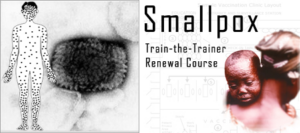
Smallpox Train-the-Trainer Renewal
The purpose of this course is to provide public health officials with information regarding smallpox to be able to respond quickly and effectively to smallpox outbreaks and in case smallpox is used as a bioterrorism weapon. There are ten modules in this course: Smallpox: The Disease Rash Evaluation Distribution & Storage Reconstitution of Vaccine Vaccination Clinic Set Up Administering Vaccine Screening Site Care/Take Evaluation Adverse Reactions Quarantine & Isolation Intended Audience — Those who have successfully completed an Iowa Department of Public Health Smallpox TTT program with updated information and an opportunity to review the subject content. Learning Objectives — At...

Social Marketing and Public Health: Effective Campaigns and How They Work
This presentation provides an overview of the theories behind social marketing, social marketing strategies, how it works, and examples of effective campaigns Intended Audience: — Learning Objectives: — By the end of the course, you should be able to do the following: Understand social marketing. Social marketing theories and strategies. Principals and evidence of effectiveness. Pre-requisites/Learning Level: — None Competencies addressed: — Communications 1.9. Share information that is understood by the average person using the media, various electronic technologies, and community networks. CEUs Offered: — N/A Cost: — Free Modality/format: — Online Self-Pace Length: — 1 hour Presenter(s) and/or Content...
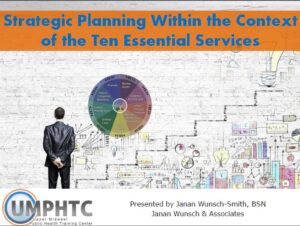
Strategic Planning
The University of Iowa College of Public Health's Upper Midwest Public Health Training Center (UMPHTC), in cooperation with the Iowa Counties Public Health Association (ICPHA), has developed a series of practiced-based educational programs targeted toward new public health administrators and nursing administrators. The programs are part of the Institute's continuing effort to provide training to strengthen the skills and knowledge of the current public health workforce Intended Audience — Public health administrators and nurse administrators who are relatively new in their positions (3 years or less) and who seek to enhance their skills and knowledge Learning Objectives — At the...
Systems Thinking: Through A Public Health Lens
Course Goal — This course is designed to introduce participants to the idea of systems thinking. Intended Audience — Public health practice professionals Length — The length of time for participants to take this course is estimated to be one hour. Course Content — This course will cover: Systems thinking and leadership Accreditation and systems thinking A call to action Application from the field Measurable Outcome — At the end of this training, you will be able to apply the principles of systems thinking to relevant public health issues. Learning Objectives — By the end of this module, you will...
The Messenger Chronicles: Introduction & The Four Cs
Contact: Brandi Bordelon Phone: (504) 988-1342 E-mail: trdirect@tulane.edu Description: — The "Messenger Chronicles: Effective communication strategies for difficult conversations" presents a new framework for communication in difficult situations. This framework shifts focus away from managing "difficult" people towards and understanding of the process of difficult conversations and accepting responsibility for one's own performance. Given realistic situations and real-world conversations, learners will experience communication strategies and practical techniques in context. The "Messenger Chronicles" is organized into a number of modules that simulate realistic conversations. Many of the conversations are split into three sections: Read, Think and Analyze. Learners will read a...
The Messenger Chronicles: Managing Stress and Time
The "Messenger Chronicles" online training series presents ideas for communication in difficult situations. The "Managing Stress and Time" module, helps learners to recognize the symptoms of stress and the factors that may increase their susceptibility to stress. Strategies to manage stress are offered in the scenario-based training. Learners are also given a framework for managing and prioritizing tasks to help minimize "stress-causing" situations. Job aids like the "Project Startup Tool" and the "Urgent/Important Matrix" are provided for learners' use. "Managing Stress and Time" features strategies and frameworks used in real world situations that learners can apply to their own environments. ...
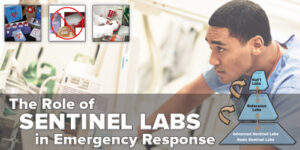
The Role of Sentinel Labs in Emergency Response
There are five sections in this course: Section 1: The National Laboratory Response Network Section 2: Basic and Advanced Sentinel Laboratories Section 3: Role of Public Health Labs in Emergency Response Section 4: Role of Sentinel Laboratories in a Bioterrorism Event Section 5: Role of Sentinel Laboratories in a Chemical Event Modules 1 through 3 contain "pop quizzes" to assist you in understanding and assimilating the information. Module 4 and 5 contains scenario exercises to enable you to apply what you have learned to situations that may occur during a bioterrorism or chemical event. Intended Audience — Individuals who work...
Volunteer Management for Public Health
Course Summary — There are five sections in this course: Section 1: Types of Volunteers Section 2: Important Considerations When Using Volunteers Section 3: VOLAGs, MRC, DMATs Section 4: Developing a Volunteer Program Section 5: Orientation, Training, and Deployment There are review questions at the end of modules. These review questions will provide you with an opportunity to apply the knowledge and skills presented in these modules. Intended Audience — public health agencies in Iowa who may need to utilize volunteers in both emergency and non-emergency situations Learning Objectives: — After successfully completing this course, you will be able to:...
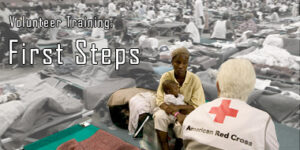
Volunteer Training: First Steps
This course will explain why volunteers are an essential part of a successful emergency response and guide you through the process of becoming a volunteer. Intended Audience — potential public health volunteers Learning Objectives: — Upon completion of this part, you will be able to: Describevarious roles volunteers will play in the response to a disaster or other public health emergency Describewhat training is required to enable a volunteer to function safely and effectively in an emergency response Listreasons why it is important for an individual who wishes to volunteer to become affiliated with an agency or organization incorporate in...
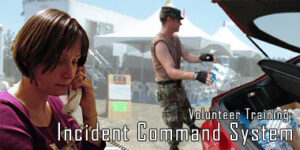
Volunteer Training: Incident Command System (ICS)
Course Summary — Rxplain how the Incident Command System works and how you as a volunteer fit into it Intended Audience — Volunteers Learning Objectives: — After successful completion of this course, you will be able to: Describethe basic management features of the Incident Command System and their value during an emergency response Describethe roles and responsibilities of the Incident Commander and Command Staff Describethe roles and functions of the Operations Section, the Planning Sections, the Logistics Section, and the Finance/Administration Section Describethe functions of the following designated incident facilities; the Incident Command Post, the Multiple Agency Coordination Center, and...
Volunteer Training: Personal Protective Equipment
Course Summary — Demonstrate the appropriate use of PPE Intended Audience — Volunteers Learning Objectives: — Upon completion of this part, you will be able to: Explain why Personal Protective Equipment (PPE) may be necessary for those acting as volunteers in a public health emergency Describe the process for selecting PPE and ensuring its safe and effective use Describe the use or non-use of PPE in recent events, and lessons learned List most common types of PPE and the general purpose of each Demonstrate how to correctly don and doft the most common types of PPE Expalin the appropriate use...
Volunteer Training: Stress Management
Course Summary — A disaster is a traumatic event for members of the affected community, and can have a negative impact on mental health. It is not only victims who can suffer from traumatic stress. Emergency responders can suffer from it as well. It is vital for individuals involved in the emergency response to manage their stress to whatever degree possible, in order to maintain the safety of themselves and others as they carry out their duties during the event, perform their duties effectively, and to minimize the risk of developing any long-term psychological problems after the event. The goal...
Weapons of Mass Destruction – Awareness
There are five modules in this course. When you are finished reading this course overview, complete the Pre-test. You can access the Pre-test by clicking on the link provided on the course menu on the left. After you've completed the Pre-test, move on to the first module, "Prevention and Deterrence". Once you have completed this module and its practice exercises, go on to the following four modules which are: "Chemical Agents", "Biological Agents", "Radiological Materials", and "Explosive Devices". The first module, "Prevention and Deterrence", begins by defining Terrorism and its impact in the foundations of America. You will also read...